Spend approximately 5-10+ minutes warming-up the voice (varies depending on how your voice feels). Touch on each of the following areas (feel free to come up with your own warm-ups that focus on each area or expand on the suggestions below).
While there's no hard right or wrong to the order you approach your warm up and exercise types, follow the path of least resistance:
1) Establish breath flow and sensations of releasing air
Examples: Sighs, Hiss, Fffff, Shhhh,
2) Mouth Partially Closed (SOVT)
Examples: mmm, vvvvv, ng, straw glides
3) Vowels / Open Mouth Exercises
Examples: Ah, Eh, Oo, etc...Mouth shaping (narrow towards front, tall in back)
4) Consonant and Vowel combinations
Examples: Vee, Mah, Goo, Thoh, Bah, etc..
5) String full words together
Examples: Repertoire, phrases
While there's no hard right or wrong to the order you approach your warm up and exercise types, follow the path of least resistance:
1) Establish breath flow and sensations of releasing air
Examples: Sighs, Hiss, Fffff, Shhhh,
2) Mouth Partially Closed (SOVT)
Examples: mmm, vvvvv, ng, straw glides
3) Vowels / Open Mouth Exercises
Examples: Ah, Eh, Oo, etc...Mouth shaping (narrow towards front, tall in back)
4) Consonant and Vowel combinations
Examples: Vee, Mah, Goo, Thoh, Bah, etc..
5) String full words together
Examples: Repertoire, phrases
STRETCH
- Make exaggerated chewing motions. Try while humming gently on a single pitch.
- Release jaw. Massage jaw hinge and mandible with fingertips.
- With mouth closed, put the tip of the tongue against your bottom teeth and the topside of your tongue against the hard palate. Release your jaw to a comfortably open position but keep the tongue against the roof of your mouth - your tongue will have to slide forward along the hard palate to keep the tip of the tongue on the bottom teeth.
- Try to move your head from side to side in a smooth continuous motion while sliding up and down on a hum.
- Bend forward at the waist - breathe into your back, feeling the ribs expand.
- Jaw
- Make exaggerated chewing motions. Try while humming gently on a single pitch.
- Release jaw. Massage jaw hinge and mandible with fingertips.
- Tongue
- With mouth closed, put the tip of the tongue against your bottom teeth and the topside of your tongue against the hard palate. Release your jaw to a comfortably open position but keep the tongue against the roof of your mouth - your tongue will have to slide forward along the hard palate to keep the tip of the tongue on the bottom teeth.
- Neck
- Try to move your head from side to side in a smooth continuous motion while sliding up and down on a hum.
- Ribs
- Bend forward at the waist - breathe into your back, feeling the ribs expand.
ENERGIZING BREATH AND SOUND
- Use my Breath Work page to check in with your breath support. Floor breathing exercises are a good place to start.
- Sigh
- Siren
- “Hi, How Are You”
VIBRATION - Semi Occluded Vocal Tract Exercises (SOVTs)
These exercises should help you find a more "forward" or "in the mask" resonance. Read more about the benefit of SOVTs here.
- Try scooping and sliding around in your range and observe the shifting location of the sympathetic vibrations.
These exercises should help you find a more "forward" or "in the mask" resonance. Read more about the benefit of SOVTs here.
- “Home” - hum
- Try scooping and sliding around in your range and observe the shifting location of the sympathetic vibrations.
- "Ng"
- “Ming ming ming ming ming” / “Nyang nyang nyang nyang nyang” - 5 4 3 2 1
- “Lip Trill”
|
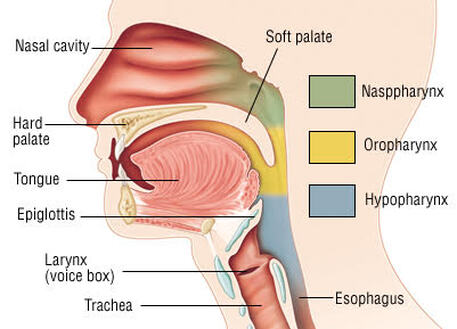
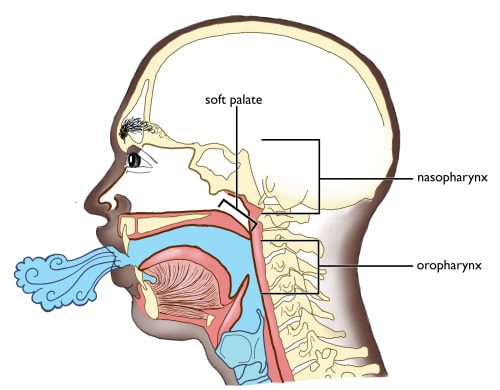
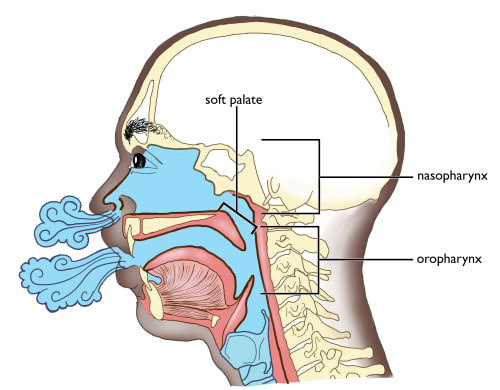
SOFT PALATE
|
|